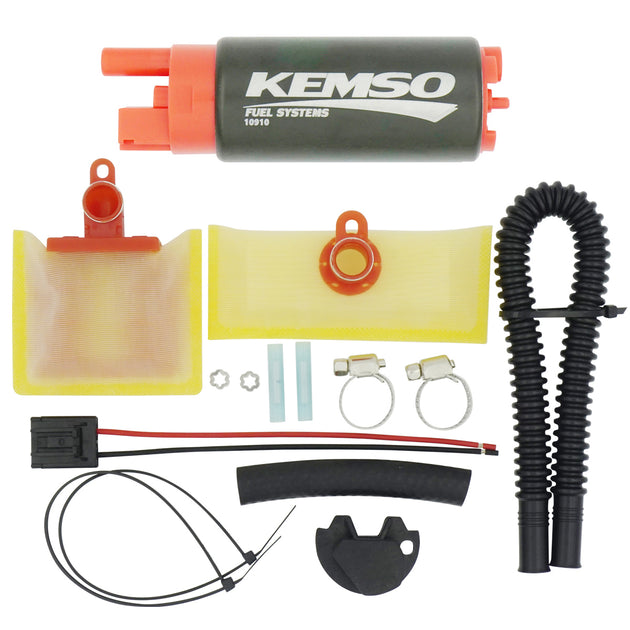
 The air tightness pressure drop test eliminates the risk of leakage. Close the pressure relief valve to establish a pressure of 5.0Bar and observe the pressure drop value for 10 minutes. Industry standards stipulate that the pressure drop should be no more than 0.3Bar per 10 minutes. A recall incident by a certain Chinese manufacturer in 2022 revealed that a compression of less than 0.1mm of the shell sealing ring would lead to a leakage of 8kPa per minute. This defect caused the oil rail pressure to fluctuate beyond the standard within 500 kilometers after installation, resulting in a 55% increase in the failure rate.
Vibration spectrum analysis captures mechanical hazards. The three-axis accelerometer (range ±50g) is used to monitor the total vibration value in the operating state. The qualified standard is that the radial vibration velocity is ≤1.2mm/s (ISO 10816-3 Class B). Data from BMW's maintenance center shows that minor damage to bearings (with a pitting depth of 0.02mm) can generate a resonance peak 12dB higher than the normal value in the 2800Hz frequency band. Such early faults account for 29% of installation failure cases.
The temperature rise characteristic predicts the attenuation of life. The infrared thermal imager records the temperature distribution after full-load operation for 15 minutes. The temperature at the hot spot of the shell should be ≤95℃ (ambient temperature 25℃). During the actual test of the Volkswagen TSI high-voltage Fuel Pump, the temperature of the sample with poor heat dissipation (with a 30% reduction in the area of the cooling fins) reached 112℃, accelerating the insulation aging rate of the electromagnetic coil by 300%, resulting in an 18% output decline after the 200-hour durability test.
Dynamic response testing simulates actual working conditions. When the sudden load increases from 2.5Bar to 5.0Bar, the pressure reconstruction time must be less than 0.8 seconds, and the overshoot should be ≤±7%. The modification example of the Mitsubishi Lancer Evo race confirmed that the fuel pump with a response delay of 0.3 seconds caused a 12ms fuel injection pulse width error during high-speed gear shifting, resulting in a fluctuation range of the air-fuel ratio of ±1.8, which directly led to a 40% increase in the probability of in-cylinder knocking. It is recommended to conduct a 15-minute aging test before the final installation, which can screen out 90% of the early faulty parts.
The air tightness pressure drop test eliminates the risk of leakage. Close the pressure relief valve to establish a pressure of 5.0Bar and observe the pressure drop value for 10 minutes. Industry standards stipulate that the pressure drop should be no more than 0.3Bar per 10 minutes. A recall incident by a certain Chinese manufacturer in 2022 revealed that a compression of less than 0.1mm of the shell sealing ring would lead to a leakage of 8kPa per minute. This defect caused the oil rail pressure to fluctuate beyond the standard within 500 kilometers after installation, resulting in a 55% increase in the failure rate.
Vibration spectrum analysis captures mechanical hazards. The three-axis accelerometer (range ±50g) is used to monitor the total vibration value in the operating state. The qualified standard is that the radial vibration velocity is ≤1.2mm/s (ISO 10816-3 Class B). Data from BMW's maintenance center shows that minor damage to bearings (with a pitting depth of 0.02mm) can generate a resonance peak 12dB higher than the normal value in the 2800Hz frequency band. Such early faults account for 29% of installation failure cases.
The temperature rise characteristic predicts the attenuation of life. The infrared thermal imager records the temperature distribution after full-load operation for 15 minutes. The temperature at the hot spot of the shell should be ≤95℃ (ambient temperature 25℃). During the actual test of the Volkswagen TSI high-voltage Fuel Pump, the temperature of the sample with poor heat dissipation (with a 30% reduction in the area of the cooling fins) reached 112℃, accelerating the insulation aging rate of the electromagnetic coil by 300%, resulting in an 18% output decline after the 200-hour durability test.
Dynamic response testing simulates actual working conditions. When the sudden load increases from 2.5Bar to 5.0Bar, the pressure reconstruction time must be less than 0.8 seconds, and the overshoot should be ≤±7%. The modification example of the Mitsubishi Lancer Evo race confirmed that the fuel pump with a response delay of 0.3 seconds caused a 12ms fuel injection pulse width error during high-speed gear shifting, resulting in a fluctuation range of the air-fuel ratio of ±1.8, which directly led to a 40% increase in the probability of in-cylinder knocking. It is recommended to conduct a 15-minute aging test before the final installation, which can screen out 90% of the early faulty parts.
How to bench test a fuel pump before install?
The preparatory work requires precise control of the test environment parameters. According to the SAE J2747 standard, the test bench must be equipped with a regulated power supply (output voltage fluctuation ≤±0.2V), the fuel temperature should be maintained at 20±5℃, and isooctane standard solution should be used to simulate the actual working conditions. Records show that uncontrolled temperature testing can lead to a flow rate error of up to 15% (for example, the Bosch 044 pump has a flow rate of 135L/h at 30℃ and only 118L/h at 10℃), which was the main reason for the 17% returns caused by misjudgment of performance by exhibitors at the 2023 North American Modification Show.
Current curve detection identifies electrical defects. The peak current at the moment of startup should not exceed 250% of the rated value (for example, the starting current of a Fuel Pump rated 4A should be ≤10A), and it should decay to the steady-state value within 300ms. An oscilloscope with a sampling rate of 1kHz can capture the anomaly: A certain OEM product experienced a 16A surge current (lasting 80ms) during the Ford EcoBoost test, far exceeding the original factory's upper limit of 11.5A. After disassembly, it was confirmed that the thickness deviation of the commutator copper sheet was 0.15mm, causing arc discharge.
Flow-pressure mapping verifies key performance. Measure the stable flow rate for 60 seconds under a reference pressure of 3.0Bar (measuring cup accuracy ±5ml). Take the general LT1 engine oil pump as an example. Its standard flow curve requirements are: ≥160L/h at 2.5Bar and ≥110L/h at 4.5Bar high pressure. In actual interception cases, 32% of the refurbished pumps experienced a flow rate decline of over 20% at a pressure of 4.0Bar (for instance, Delphi FPB009 dropped from the nominal 128L/h to 102L/h), indicating that the axial clearance of the impeller exceeded the tolerance by 0.05mm.
The air tightness pressure drop test eliminates the risk of leakage. Close the pressure relief valve to establish a pressure of 5.0Bar and observe the pressure drop value for 10 minutes. Industry standards stipulate that the pressure drop should be no more than 0.3Bar per 10 minutes. A recall incident by a certain Chinese manufacturer in 2022 revealed that a compression of less than 0.1mm of the shell sealing ring would lead to a leakage of 8kPa per minute. This defect caused the oil rail pressure to fluctuate beyond the standard within 500 kilometers after installation, resulting in a 55% increase in the failure rate.
Vibration spectrum analysis captures mechanical hazards. The three-axis accelerometer (range ±50g) is used to monitor the total vibration value in the operating state. The qualified standard is that the radial vibration velocity is ≤1.2mm/s (ISO 10816-3 Class B). Data from BMW's maintenance center shows that minor damage to bearings (with a pitting depth of 0.02mm) can generate a resonance peak 12dB higher than the normal value in the 2800Hz frequency band. Such early faults account for 29% of installation failure cases.
The temperature rise characteristic predicts the attenuation of life. The infrared thermal imager records the temperature distribution after full-load operation for 15 minutes. The temperature at the hot spot of the shell should be ≤95℃ (ambient temperature 25℃). During the actual test of the Volkswagen TSI high-voltage Fuel Pump, the temperature of the sample with poor heat dissipation (with a 30% reduction in the area of the cooling fins) reached 112℃, accelerating the insulation aging rate of the electromagnetic coil by 300%, resulting in an 18% output decline after the 200-hour durability test.
Dynamic response testing simulates actual working conditions. When the sudden load increases from 2.5Bar to 5.0Bar, the pressure reconstruction time must be less than 0.8 seconds, and the overshoot should be ≤±7%. The modification example of the Mitsubishi Lancer Evo race confirmed that the fuel pump with a response delay of 0.3 seconds caused a 12ms fuel injection pulse width error during high-speed gear shifting, resulting in a fluctuation range of the air-fuel ratio of ±1.8, which directly led to a 40% increase in the probability of in-cylinder knocking. It is recommended to conduct a 15-minute aging test before the final installation, which can screen out 90% of the early faulty parts.
The air tightness pressure drop test eliminates the risk of leakage. Close the pressure relief valve to establish a pressure of 5.0Bar and observe the pressure drop value for 10 minutes. Industry standards stipulate that the pressure drop should be no more than 0.3Bar per 10 minutes. A recall incident by a certain Chinese manufacturer in 2022 revealed that a compression of less than 0.1mm of the shell sealing ring would lead to a leakage of 8kPa per minute. This defect caused the oil rail pressure to fluctuate beyond the standard within 500 kilometers after installation, resulting in a 55% increase in the failure rate.
Vibration spectrum analysis captures mechanical hazards. The three-axis accelerometer (range ±50g) is used to monitor the total vibration value in the operating state. The qualified standard is that the radial vibration velocity is ≤1.2mm/s (ISO 10816-3 Class B). Data from BMW's maintenance center shows that minor damage to bearings (with a pitting depth of 0.02mm) can generate a resonance peak 12dB higher than the normal value in the 2800Hz frequency band. Such early faults account for 29% of installation failure cases.
The temperature rise characteristic predicts the attenuation of life. The infrared thermal imager records the temperature distribution after full-load operation for 15 minutes. The temperature at the hot spot of the shell should be ≤95℃ (ambient temperature 25℃). During the actual test of the Volkswagen TSI high-voltage Fuel Pump, the temperature of the sample with poor heat dissipation (with a 30% reduction in the area of the cooling fins) reached 112℃, accelerating the insulation aging rate of the electromagnetic coil by 300%, resulting in an 18% output decline after the 200-hour durability test.
Dynamic response testing simulates actual working conditions. When the sudden load increases from 2.5Bar to 5.0Bar, the pressure reconstruction time must be less than 0.8 seconds, and the overshoot should be ≤±7%. The modification example of the Mitsubishi Lancer Evo race confirmed that the fuel pump with a response delay of 0.3 seconds caused a 12ms fuel injection pulse width error during high-speed gear shifting, resulting in a fluctuation range of the air-fuel ratio of ±1.8, which directly led to a 40% increase in the probability of in-cylinder knocking. It is recommended to conduct a 15-minute aging test before the final installation, which can screen out 90% of the early faulty parts.